Author: john@avisollc.com

  • Member Conversations

    Member Conversations

    Member Conversations

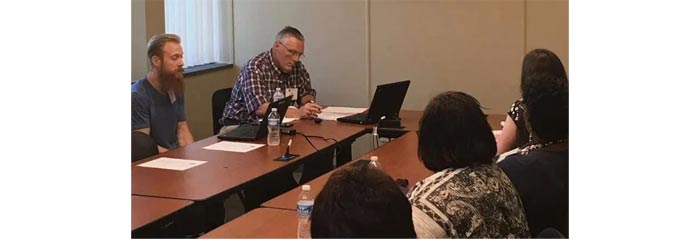
    In 2015, NCABR began an ongoing series of periodic member meetings, called Member Conversations, which address timely topics of interest for the membership. Member Conversations are held as-needed and upon request from the membership, either in-person in small group settings or they can be held virtually.

    Member Conversations* have addressed topics, including:

    • Controlled Substances
    • Memoranda of Understanding (MOUs) and Inter-Institutional Assurances (IIAs)
    • Reducing Regulatory Burden for IACUCs
    • Security Issues and Risks at North Carolina Animal Research Facilities
    • Impact of COVID-19 on North Carolina’s Lab Animal Research Community
    • Logistics of Planning and Hosting an AAALAC Site Visit During the Pandemic

    *Must be an employee of an NCABR member organization to attend.

  • Bridging the Gap 2025

    Bridging the Gap 2025

    Bridging the Gap 2025

    The 2025 Bridging the Gap conference will be held October 28-29 at the North Carolina Biotechnology Center in Research Triangle Park.

    Bridging the Gap is an annual conference whose goal is to strengthen K-16 STEM education throughout North Carolina.

    Bridging the Gap brings together educators, business leaders, government officials and others who play a role in STEM education to share ideas and resources to ultimately fortify and diversify our state and nation’s STEM workforce pipelines. Since 2012, more than 4,180 STEM stakeholders from North Carolina and beyond have attended.

     
    • Date:  October 28-29, 2025
    • Conference Location:
        North Carolina Biotechnology Center  Research Triangle Park, N.C.
    • Who is it for?  
      • K-12
      • Higher Education
      • Industry
      • Government
      • Other STEM Groups


    Let’s Get Started
    PRICE PER ATTENDEE
    Before September 2:

    K-12 Education – $225

    Higher Education : Members – $225; Non-members – $365

    Industry: Members – $225; Non-members – $365

    Government:  $225

    Other STEM Groups: $225

     
    After September 2:

    K-12 Education: $390

    Higher Education: Members – $390; Non-members – $520

    Industry: Members – $390; Non-members – $520

    Government: $390

    Other STEM Groups: $390


    IMPORTANT DATES

    September 3: 
    Registration prices increase

    October 20:

    • Last day to receive payments by check
    • Last day to cancel registrations
    • Last day to register

    October 28: 
    First day of conference (on-site registration is not available)


    PAYMENTS BY CHECK

    NCABR

    Attn: Bridging the Gap Conference

    P.O. Box 19469

    Raleigh, NC 27619-9469


    CANCELLATION POLICY

    If you wish to cancel your registration, you must notify us on or before October 20, 2025, to receive a refund. You will be refunded in the manner of your original payment.  

    To cancel your registration, please contact Virginia Crisp.

    The following is a national call for speakers, open to all STEM stakeholders, including K-12 educators and administrators, higher education faculty and students, and those representing nonprofit organizations, government agencies and other STEM groups.

    Presenters are asked to share resources and best practices in STEM education. Presentations should be engaging and should foster collaboration between K-16 STEM education communities.

    Each session will be 50 minutes in length.

    PRESENTATION CATEGORIES


    50-minute presentation

    Provides instruction and ideas for implementing Citizen Science with K-12 students. Citizen Science is the collection and analysis of data relating to the natural world by members of the general public, typically as part of a collaborative project with professional scientists. Sessions may address:

    • Implementing Citizen Science in the classroom
    • Working with research partners
    • Web-based tools and resources
    • Co-creating new Citizen Science topics with researchers
    • Data matters: Going from raw data to impact and classroom connections

    50-minute presentation

    Provides teachers with inquiry-based, hands-on activities and practical guidance for incorporating STEM in the classroom using cross-content integration. Sessions may address:

    • STEM to STEAM, STREAM or STEMM: Strategies for building bridges across contexts and disciplines
    • STEM in elementary education: Bringing science back into the curriculum
    • Mathematical connections to the real world
    • Integrating creativity in the hard sciences with STEAM
    • Design thinking in the classroom
    • Problem- and project-based learning (PBL)
    • Instructional design innovations
    • Vertical alignment
    • The student-centered classroom
    • Teaching tools for differentiated instruction
    • STEM strategies and implementation
    • Grand challenges and critical thinking in the classroom
    • Online crowdfunding for classroom needs

    50-minute presentation

    Links educators to industry leaders in the exploration of specific workforce needs both now and in the future. This track focuses on the connections between education and the world of work through industry insight. Sessions may include:

    • Future workforce needs
    • Specific STEM industry needs
    • Diversity, equity and inclusion initiatives that address STEM industry employment needs
    • Middle-skill STEM jobs
    • Career readiness and employability
    • Extreme vertical alignment
    • Connecting education and employment
    • Career and Technical Education (CTE)
    • The 2+2 pathway
    • Industry involvement in the classroom
    • Digital disruption
    • Entrepreneurial design for teaching
    • Automation and artificial intelligence

    5 to 10-minute presentation repeated for 50 minutes
    Attendees move around the room to different tables

    Provides attendees from higher education and informal/other STEM groups who are looking to share research outcomes and finished products with an opportunity to:

    • Disseminate deliverables from grant-funded research activities
    • Disseminate STEM education resources
    • Disseminate STEM curricula
    • Promote museum and other informal STEM outreach opportunities
    • Promote STEM programs for K-12 teachers and students
    • Promote products in the final stages of development
    • Promote offerings from university centers and institutes
    • Promote partnerships for ongoing and future programs with K-12 teachers and students

    50-minute presentation

    Explores learning from a whole child development perspective, which recognizes the complex environments in which educators must work while empowering students with the latest STEM learning. This track also explores how to prepare students for today’s information environment and it addresses practical applications and knowledge related to critical thinking, training and development for students and educators. Sessions may address:

    • How to support learning, informed instruction and intrinsic motivation
    • How to communicate high expectations in the classroom
    • How to develop student motivation, efficacy and perseverance
    • STEM assessment: Formative and summative
    • Social-emotional learning (SEL) and whole child development
    • Connections between student wellness and academic success
    • Deeper learning: 22nd century skills, including soft skills
    • Communication, critical thinking, collaboration and creativity
    • What we believe about critical thinking skills and why
    • Media and digital literacy

    50-minute presentation

    Connects higher education researchers with K-12 educators to explore the practical application of learning theory and current research in classroom instruction. Sessions may include:

    • The science of learning in the real world
    • Applying research to personalized learning
    • Free and open resources, textbooks, materials and courses
    • Curriculum mapping and authentic higher education experiences
    • Contextualized instruction
    • Higher education collaboration opportunities
    • Blended environments and classroom community connections
    • Higher education and community collaborations to foster diversity, equity and inclusion in STEM
    Provides K-12 teachers with practical strategies to meet STEM classroom needs (time management, space, integration, differentiation, funding, etc.). This track is geared for educators and partners who are new to STEM.

    Explores ways to design a STEM learning experience that meets the unique and differentiated needs of all children in the classroom. Leveraging the latest research in universal lesson plan design, educators will learn how to develop lessons and activities that work for all students. Sessions may address:

    • Serving K-12 gifted students
    • Serving K-12 students with disabilities
    • Diversity, equity and inclusion initiatives in K-12 STEM education
    • Pedagogies for mentoring underrepresented students in higher education
    • Reaching low SES (socioeconomic status), rural, urban and minority students

    50-minute presentation

    Explores the recipe for redefining the teacher role in the classroom and ways teachers can feel supported and empowered in their work. Sessions may address:

    • Redefining the teacher role: Moving from lecturer to facilitator
    • Communication and partnering with parents
    • Professional development and capacity building
    • STEM discoveries: Fascinating new findings

    50-minute presentation

    Proposes alternative classroom designs that encourage active learning and development. This track focuses on emerging pedagogies and technologies designed to activate learning in new and meaningful ways. Sessions may include:

    • Artificial intelligence
    • Augmented reality
    • Alternative classroom design
    • Gamification of learning
    • The future of coding in the classroom
    • The tools, mindset and materials of makers
    • Makerspaces and virtual labs
    • Augmented reality
    • STEM video games
    • Artificial intelligence
    • Family Code Nights

    IMPORTANT DATES

    • June 18 – Deadline to submit application to present
    • July 15 – Deadline for presenters to be notified
    • August 20Deadline for presenters to register for the conference or presentation will be cancelled
    • October 8 – Deadline to upload slides and/or other materials to be made available after the conference
    • October 20 – Deadline for outstanding invoices or presentation will be cancelled

    REGISTRATION PRICING FOR PRESENTERS

    If your presentation is approved, each person who will be physically present in your presentation must purchase a conference registration. Up to three presenters for each approved presentation will receive a 25% registration discount. (This is in addition to any “early bird” rates that may be in effect for all conference registrants.) A special code to receive this discount will be included in each presenter acceptance email. Please note that the additional 25% discount is limited to individuals listed on the presentation application. Presenter registration discounts cannot be combined with any other registration discounts.

    PRESENTER UPLOADS

    Presenters who would like to make their slides and/or other materials available on the conference website should upload their slides using the button below no later than October 8. We will post them after the conference ends.

    What to Expect as an Exhibitor 
    at Bridging the Gap 2025

    The Bridging the Gap 2025 exhibit space will be integrated into the heart of the action in the conference’s main thoroughfare – all on the first floor in the North Carolina Biotechnology Center’s main lobby. Conference attendees will not need to search for you because they will mix and mingle and enjoy snacks, meals and refreshments where you are. Exhibitors will enjoy connecting with potential customers and they will enjoy Bridging the Gap’s fresh hot meals and all-day beverage service in a beautiful space known for its soaring 40-foot ceilings and gleaming hardwood floors – all awash in natural sunlight.

    $395 FOR NONPROFITS/ $525 FOR OTHERS

    What’s Included?

    • Logo included in conference program
    • 6-foot exhibit table and a chair
    • WiFi and electricity included – most conferences charge you extra!  (deadline to request electricity is September 11)
    • 1 representative permitted to staff table (a value of $225)
    • Delicious hot buffet lunches and all-day beverages on-site – right there in the exhibit area so you never need to leave the conference venue – for both days of the conference.


    IMPORTANT DATES

    September 10

    • Last day to register as an exhibitor

    September 11

    • Last day to upload logofor conference program
    • Last day to submit request for electricity at booth
    • Last day to cancel registration

    October 27

    • Exhibit setup from 2:00 p.m. to 5:00 p.m.

    October 28

    • Exhibit setup from 7:00 a.m. to 8:30 a.m.
    • Exhibits open 8:00 a.m. to 4:00 p.m.

    October 29

    • Exhibits open 7:00 a.m. to 3:00 p.m.
    • Exhibit breakdown starts at 3:00 p.m.

    NCABR reserves the right to refuse to admit or to eject from the exhibit hall or any other area leased by NCABR for Bridging the Gap any person, exhibit or thing, at the sole discretion of NCABR, in its opinion, that is not in keeping with the character and purpose of the Bridging the Gap conference.


    Conference Location

    North Carolina Biotechnology Center

    15 TW Alexander Drive Research Triangle Park, NC 27709


    Preferred Hotel

    Homewood Suites by Hilton Raleigh-Durham AP/Research Triangle

    • 4603 Central Park Drive
      Durham, NC 27703 |
      919-474-9900

    Special Group Rate= $139/night plus taxes

    Click HERE to make your reservation.


    Area Hotels

    Delta Hotels by Marriott Raleigh-Durham at Research Triangle Park

    • 151 Tatum Drive  Durham, NC 27703 | 919-474-3000

    Doubletree Suites Raleigh-Durham

    • 2515 Meridian Parkway  Durham, NC 27713 | 919-361-4660

    Hilton Garden Inn

    • 4620 S. Miami Blvd.  Durham, NC 27703 | 919-941-6066

    Holiday Inn Express

    • 4912 S. Miami Blvd.  Durham, NC 27703 | 919-474-9800
    Conference Organized By:
    Presenting Sponsors:
    Gold Sponsor:
    Silver Sponsors:
    Bronze Sponsors:
    Partners:

  • Biotechnology Research & Careers Online Course

    Biotechnology Research & Careers Online Course

    The goal of this course is to increase awareness of biotechnology research, its applications and related career opportunities among middle and high school educators. It is based on NCABR’s Mapping Your Future: Careers in Biomanufacturing curriculum manual.

    The manual was updated comprehensively in spring 2014 to reflect the current biomanufacturing and biotechnology landscape in North Carolina.

    The course is self-paced and incorporates a variety of modalities, including online learning modules and curriculum review. Participants will earn 10 contact hours (1 CEU) upon completion of the basic, required assignments and 10 additional contact hours (1 additional CEU) if the optional classroom implementation assignment for 3 of the course’s 5 units is completed.

    View the North Carolina Essential Standards and Next Generation Science Standards for the curriculum manual and the Teacher Evaluation Matrix for the course.

    This course was made possible by the Biogen Foundation.

    CareMessage Teams Up with the Biogen Foundation to Improve Health Outcomes for 25,000 North Carolina Patients - CareMessage

    Let’s Get Started
    • For pre-service and current science or CTE educators in grades 6–12

    • Current course window: Open rolling admissions. Course lasts six weeks from the date of registration.
    • With PDF curriculum manual: $30

    • With printed curriculum manual: $85
    • 10–20 hours of course work Provides either 10 or 20 contact hours (1 or 2 CEUs), depending on the amount of course work completed

      For questions, email Virginia Crisp at vcrisp@ncabr.org

    For whom is this course intended?  North Carolina educators who teach biotechnology within their curriculum, including CTE and science classes, are encouraged to take this course. Other educators also are welcome to take the course to enhance their content knowledge.

    How long do I have to complete this course?  
    This self-paced course will run for approximately 6 weeks. You will need to complete all assignments and submit all your review questions within the 6-week window.

    An approximate time commitment is listed next to each group of assignments. Participants are welcome to work at a faster or slower pace, as long as all course work is completed within the 6-week window.

    How many contact hours/CEUs will I earn from completing this course?  
    You will earn either 10 contact hours (1 CEU) or 20 contact hours (2 CEUs) of regular or technology credits for completing this course.

    You will earn 10 contact hours (1 CEU) if you complete all required course work (answering questions about the assigned readings/videos/websites and completing the course evaluation). You will earn 10 additional contact hours (1 additional CEU) if you complete 3 of the 5 optional classroom implementation assignments.

    Incremental contact hours will not be issued (you cannot earn 15 contact hours, for example).

    What kind of documentation will I receive about the contact hours I have earned?  
    NCABR will mail you a certificate that indictates the number of contact hours you have earned.

    I’m not currently an educator but want to maintain my North Carolina teaching certification.  May I take this course for CEU credit?  
    Of course. Any former or current educator may participate in this course for the opportunity to earn 1 CEU. However, only actively employed educators will be able to complete the optional classroom Implementation assignments to earn an additional CEU.

    Is this course led by an instructor?  
    An NCABR staff member will serve as the moderator for this course. However, the course has been designed for you to work through the material independently.

    1. Make Sure You’re Registered Have you registered? If so, you will have received a confirmation email from NCABR. If you haven’t, please click the “Register Now” button at the top of the right column.
    2. Read/Watch/Review the Assigned Resources Access each assignment for Units I–V by clicking its link below. All assignments are required unless marked “Optional.”
    3. Answer Questions After you complete the assignments for each section, you’ll need to answer questions about them. You can access these questions by clicking the blue “Submit My Answers” button at the top right of this page. Each of the course’s 5 units also corresponds with an optional classroom implementation assignment. Completing 3 of these allows you to earn 10 additional contact hours. They can be accessed by clicking the the blue “Submit My Answers” button at the top right of this page.
    4. Complete Evaluation Complete the evaluation at the end of the “Submit My Answers” form. This is required in order to receive credit.
    5. Finish in Time Make sure you complete and submit all your answers by the last day of your 6-week window. If you do not finish the course by that time, we will not be able to grant you credit.
    6. Receive Credit After reviewing your completed course materials, NCABR will mail a certificate stating the number of contact hours you have earned to the address you provided when you registered for the course.
    • The educator will define “biotechnology” in terms students would understand.
    • The educator will explain the evolution of biotechnology over time using a technology tool.
    • The educator will identify examples of biotechnology applications.
     
    Section I–A
    Reading Assignment 
     
    Watch Video 
     
    Review Website 
     
    Answer Questions
    • Click the purple “Submit My Answers” below to answer questions for this section.
     
    Reading Assignment 
     
    Review PowerPoint 
     
    Answer Questions
    • Click the purple “Submit My Answers” button below to answer questions for this section.
     
    Reading Assignment 
     
    Watch Videos 
     
    Review PowerPoint 
     
    Answer Questions
    • Click the purple “Submit My Answers” button below to answer questions for this section.
    • The educator will explain the process a drug goes through to get to market.
    • The educator will clarify what happens in a clinical trial.
    • The educator will explain the importance of process analysis writing (step-by-step instructions) for biomanufacturing workers and other scientists.
    • The educator will understand the importance of discussing bioethics with students.
     
    Reading Assignment 
     
    Watch Video 
     
    Answer Questions 
    • Click the purple “Submit My Answers” button below to answer questions for this section.
     
    Reading Assignments 
     
    Review PowerPoint 
     
    Review Websites 
     
    Answer Questions 
    • Click the purple “Submit My Answers” button below to answer questions for this section.
     
    Reading Assignments  
     
    Review PowerPoint 
     
    Watch Videos 
    • Optional: What is an SOP?
     
    Answer Questions
    • Click the purple “Submit My Answers” button below to answer questions for this section.
    • The educator will become acquainted with the diversity of biotechnology jobs.
    • The educator will become familiar with four or more specific biotechnology jobs.
    • The educator will identify resources that students could use to research biotechnology jobs.
     
    Reading Assignments 
     
    Watch Videos 
     
    Review PowerPoint 
     
    Answer Questions 
    • Click the purple “Submit My Answers” button below to answer questions for this section.
    • The educator will explain education needs for biotechnology industry.
    • The educator will describe the skills needed to be successful in the biotechnology industry.
    • The educator will develop an activity to demonstrate the importance of biotechnology skills.


    Reading Assignments 
     
    Review PowerPoint
     
    Watch Video 
     
    Review Websites 
     
    Answer Questions
    • Click the purple “Submit My Answers” button below to answer questions for this section.
    • The educator will identify two top online biotechnology resources for educators.
    • The educator will identify two top online biotechnology resources for students.
    • The educator will develop an activity for students to interact with the specific biotechnology requirements of his or her classroom curriculum.
     
    Reading Assignments 
    Review Websites
    • Review two websites from the Unit V Reading Assignment section above.
     
    Answer Questions 
    • Click the purple “Submit My Answers” button below to answer questions for this section.
  • ​Rx for Science Literacy Workshops

    ​Rx for Science Literacy Workshops

    Rx for Science Literacy Workshops

    Since 1994, NCABR’s Rx for Science Literacy workshops have helped more than 5,655 educators from 97 of North Carolina’s 100 counties do just that.

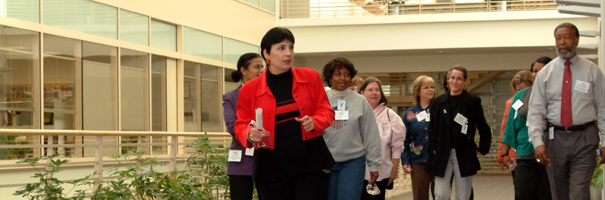
    At the workshops, educators tour a research facility, hear from scientists about their latest research advances and take home a free curriculum and other bioscience education materials.

    Each workshop is completely free to attend. You may attend as many workshops as you like.

    To help offset expenses for substitute teachers, each workshop participant who teaches in North Carolina who attends an entire workshop and provides a completed evaluation is eligible for up to $80 in substitute teacher reimbursement.

    The Rx for Science Literacy series is open to all K–12 science teachers and administrators in North Carolina as well as preservice teachers actively pursuing a degree in education.


    Operation Outbreak

    Thursday, September 17, 2026

    Appalachian State University 

    8:30 a.m. – 4:30 p.m.

    Register Here

    NCABR is partnering with Appalachian State University to present Operation Outbreak, a free one-day workshop on ThursdaySeptember 17, from 8:30 a.m. – 4:30 p.m.

    This workshop will show middle and high school teachers how to use the Operation Outbreak viral simulation tool, developed by the Broad Institute of MIT and Harvard, with students throughout North Carolina. Operation Outbreak is a free, multidisciplinary outbreak science curriculum that combines biology, epidemiology, public health and social sciences to inspire a holistic understanding of infectious disease outbreaks.

    The workshop will feature presentations from faculty and staff at Appalachian State University and will include a tour of their Mathematics and Science Education Center (MSEC).

    About the Curriculum: Operation Outbreak lesson plans offer an engaging, interdisciplinary exploration of infectious disease outbreaks. Through interactive content, case studies and expert insights, students learn about pathogens, societal responses and prevention strategies — helping them prepare to tackle health security challenges and to build a resilient future.

    Operation Outbreak was created by a middle school civics educator and a Harvard professor to educate students and others about how easily a viral pathogen outbreak can occur. Originally developed as a sticker-based activity with a Bluetooth-based application to simulate an outbreak, Operation Outbreak since has evolved into a global initiative, equipping students, educators and public health practitioners with the tools to understand and respond to outbreaks of any scale. Dr. Todd Brown, the middle school civics educator who co-founded Operation Outbreak, will present the simulation at this workshop and will discuss classroom activities related to the data collected during a simulation.

    Funding for this workshop has been made possible by:

    .       


    Operation Outbreak, Emerging Pathogens and Vaccines

    Wednesday, March 18, 2026

    Virtual with Wake Forest School of Medicine

    8:15 a.m. – 4:15 p.m.

    NCABR is partnering with the Wake Forest School of Medicine to present Operation Outbreak, Emerging Pathogens and Vaccines, a free virtual one-day workshop on Wednesday, March 18, from 8:15 a.m. – 4:15 p.m.

    About the Workshop: This virtual workshop will show middle and high school teachers how to use the Operation Outbreak viral simulation tool, developed by the Broad Institute of MIT and Harvard, with students throughout North Carolina. Operation Outbreak is a free, multidisciplinary outbreak science curriculum that combines biology, epidemiology, public health and social sciences to inspire a holistic understanding of infectious disease outbreaks.

    The workshop will feature presentations from subject matter experts at the Wake Forest School of Medicine, who will discuss mRNA vaccines, including their application for use against influenza with newborns, and other vaccines used to protect children and adults from preventable diseases, emerging pathogens and more.

    About the Curriculum: Operation Outbreak lesson plans offer an engaging, interdisciplinary exploration of infectious disease outbreaks. Through interactive content, case studies and expert insights, students learn about pathogens, societal responses and prevention strategies — preparing them to tackle health security challenges and to build a resilient future.

    Operation Outbreak was created by a middle school civics educator and a Harvard professor to educate students and others about how easily a viral pathogen outbreak can occur. Originally developed as a sticker-based activity with a Bluetooth-based application to simulate an outbreak, Operation Outbreak since has evolved into a global initiative, equipping students, educators and public health practitioners with the tools to understand and respond to outbreaks of any scale. Dr. Todd Brown, the middle school civics educator who co-founded Operation Outbreak, will present the simulation at this workshop and will discuss classroom activities related to the data collected during a simulation.

    Funding for this workshop has been made possible by:

    Clinical and Translational Science Institute (CTSI)

    Center for Vaccines at the Extremes of Aging (CVEA)


    UNC Cancer Research and Clinical Pathology Day


    Thursday, December 11, 2025

    The University of North Carolina School of Medicine

    8:00 a.m. – 4:00 p.m.

    Come step into medical school for a day with Rx for Science Literacy, which is partnering with The UNC School of Medicine to present UNC Cancer Research and Clinical Pathology Day, a one-day, in-person workshop at the UNC School of Medicine in Chapel Hill.

    About the Workshop: UNC scientists will discuss:

    Cancer Fundamentals:

    • What is cancer and how do we define it?
    • The importance of identifying specific subtypes of cancer
    • Cancer categories: Hereditary, Chemical/environmental/radiation, Sporadic, Inflammatory/immunosuppression, Oncogenic virus, Hormone imbalances
    • Therapy overview: Surgery, Chemotherapy, Immunotherapy, Hormone therapy, Targeted Therapy
    • Examples: Solid tumor and hematologic malignancy

    Novel Cancer Research Methodologies:

    • Introduction to molecular/clinical genetics (diagnostic applications)
    • Spatial analysis & proteomics (exciting new research methods, non-diagnostic)

    Pathology Careers through a Panel Discussion, to Include:

    • Veterinary Pathology
    • Pathology PA
    • Clinical Lab Scientist
    • Pathologist
    • Research

    The workshop also will include small group, hands-on activities with scientists, and a brief overview of the updated Rx for Science Literacy curriculum manual, which will be provided to all attendees at no cost (a $178 value).

    About the Curriculum: With generous support from the Biogen Foundation, NCABR and a team of science writers, biomedical researchers and curriculum developers comprehensively updated and expanded the Rx for Science Literacy curriculum manual in 2020. The updated curriculum includes a comprehensive update of all content, statistics and charts. The manual also includes a variety of new activities, resources, interviews with real world scientists and a new section on CRISPR and CRISPR technology. The manual includes chapters on nanobiotechnology, regenerative medicine and vaccines and is accompanied by resources, including a curriculum crosswalk that shows connections to the 2023 North Carolina science standards, the Next Generation Science Standards, and a reading guide aligned to the Common Core standards.

    Funding for this workshop has been made possible by:


    Weight Management: The State-of-the-Science,
    Obesity, Weight Loss Medications and More


    Friday, December 5, 2025

    Virtual with Duke University

    8:30 a.m. – 4:00 p.m.

    Rx for Science Literacy is partnering with the Duke University School of Medicine to present Weight Management: The State-of-the-Science, Obesity, Weight Loss Medications and More, a one-day virtual workshop featuring the updated and expanded Rx for Science Literacy curriculum.

    About the Workshop: This workshop will provide an overview of the Rx for Science Literacy curriculum manual, and Duke scientists will address the latest weight management research with a focus on obesity and weight loss medications. Attendees who register after December 1, 2025, will have the option of purchasing a copy of the updated Rx for Science Literacy curriculum manual if they wish to do so, but this is not required. Sub-pay reimbursement will be provided to those who registered prior to December 1, 2025.

    North Carolina-certified educators can earn up to one unit of certification renewal credit for attending this program (4 hours of additional work required).

    About the Curriculum: With generous support from the Biogen Foundation, NCABR and a team of science writers, biomedical researchers and curriculum developers comprehensively updated and expanded the Rx for Science Literacy curriculum manual in 2020. The updated curriculum includes a comprehensive update of all content, statistics and charts. The manual also includes a variety of new activities, resources, interviews with real world scientists and a new section on CRISPR and CRISPR technology. The manual includes chapters on nanobiotechnology, regenerative medicine and vaccines and is accompanied by resources, including a curriculum crosswalk that shows connections to the 2023 North Carolina science standards, the Next Generation Science Standards, and a reading guide aligned to the Common Core standards.

    Funding for this workshop has been made possible by:

  • Bridging the Gap 2026

    Bridging the Gap 2026

    Bridging the Gap 2026

    The 2026 Bridging the Gap conference will be held October 22-23 at the North Carolina Biotechnology Center in Research Triangle Park.

    Bridging the Gap is an annual conference whose goal is to strengthen K-16 STEM education throughout North Carolina.

    Bridging the Gap brings together educators, business leaders, government officials and others who play a role in STEM education to share ideas and resources to ultimately fortify and diversify our state and nation’s STEM workforce pipelines. Since 2012, more than 4,420 STEM stakeholders from North Carolina and beyond have attended.

     
    • Date:  October 22-23, 2026
    • Conference Location:
        North Carolina Biotechnology Center  Research Triangle Park, N.C.
    • Who is it for?  
      • K-12
      • Higher Education
      • Industry
      • Government
      • Other STEM Groups


    Let’s Get Started
    PRICE PER ATTENDEE
    Through August 31:

    K-12 Education – $235

    Higher Education : Members – $235; Non-members – $365

    Industry: Members – $235; Non-members – $365

    Government:  $235

    Other STEM Groups: $235

    Starting September 1:

    K-12 Education: $390

    Higher Education: Members – $390; Non-members – $520

    Industry: Members – $390; Non-members – $520

    Government: $390

    Other STEM Groups: $390


    IMPORTANT DATES

    September 1: 
    Registration prices increase

    October 14:

    • Last day to receive payments by check
    • Last day to cancel registrations
    • Last day to register

    October 22: 
    First day of conference (on-site registration is not available)


    PAYMENTS BY CHECK

    NCABR

    Attn: Bridging the Gap Conference

    P.O. Box 19469

    Raleigh, NC 27619-9469


    CANCELLATION POLICY

    If you wish to cancel your registration, you must notify us on or before October 14, 2026, to receive a refund. You will be refunded in the manner of your original payment.  

    To cancel your registration, please contact Virginia Crisp.

    The following is a national call for speakers, open to all STEM stakeholders, including K-12 educators and administrators, higher education faculty and students, and those representing nonprofit organizations, government agencies and other STEM groups.

    Presenters are asked to share resources and best practices in STEM education. Presentations should be engaging and should foster collaboration between K-16 STEM education communities.

    Each session will be 50 minutes in length.

    PRESENTATION CATEGORIES


    50-minute presentation

    Provides instruction and ideas for implementing Citizen Science with K-12 students. Citizen Science is the collection and analysis of data relating to the natural world by members of the general public, typically as part of a collaborative project with professional scientists. Sessions may address:

    • Implementing Citizen Science in the classroom
    • Working with research partners
    • Web-based tools and resources
    • Co-creating new Citizen Science topics with researchers
    • Data matters: Going from raw data to impact and classroom connections

    50-minute presentation

    Provides teachers with inquiry-based, hands-on activities and practical guidance for incorporating STEM in the classroom using cross-content integration. Sessions may address:

    • STEM to STEAM, STREAM or STEMM: Strategies for building bridges across contexts and disciplines
    • STEM in elementary education: Bringing science back into the curriculum
    • Mathematical connections to the real world
    • Integrating creativity in the hard sciences with STEAM
    • Design thinking in the classroom
    • Problem- and project-based learning (PBL)
    • Instructional design innovations
    • Vertical alignment
    • The student-centered classroom
    • Teaching tools for differentiated instruction
    • STEM strategies and implementation
    • Grand challenges and critical thinking in the classroom
    • Online crowdfunding for classroom needs

    50-minute presentation

    Links educators to industry leaders in the exploration of specific workforce needs both now and in the future. This track focuses on the connections between education and the world of work through industry insight. Sessions may include:

    • Future workforce needs
    • Specific STEM industry needs
    • Diversity, equity and inclusion initiatives that address STEM industry employment needs
    • Middle-skill STEM jobs
    • Career readiness and employability
    • Extreme vertical alignment
    • Connecting education and employment
    • Career and Technical Education (CTE)
    • The 2+2 pathway
    • Industry involvement in the classroom
    • Digital disruption
    • Entrepreneurial design for teaching
    • Automation and artificial intelligence

    5 to 10-minute presentation repeated for 50 minutes
    Attendees move around the room to different tables

    Provides attendees from higher education and informal/other STEM groups who are looking to share research outcomes and finished products with an opportunity to:

    • Disseminate deliverables from grant-funded research activities
    • Disseminate STEM education resources
    • Disseminate STEM curricula
    • Promote museum and other informal STEM outreach opportunities
    • Promote STEM programs for K-12 teachers and students
    • Promote products in the final stages of development
    • Promote offerings from university centers and institutes
    • Promote partnerships for ongoing and future programs with K-12 teachers and students

    50-minute presentation

    Explores learning from a whole child development perspective, which recognizes the complex environments in which educators must work while empowering students with the latest STEM learning. This track also explores how to prepare students for today’s information environment and it addresses practical applications and knowledge related to critical thinking, training and development for students and educators. Sessions may address:

    • How to support learning, informed instruction and intrinsic motivation
    • How to communicate high expectations in the classroom
    • How to develop student motivation, efficacy and perseverance
    • STEM assessment: Formative and summative
    • Social-emotional learning (SEL) and whole child development
    • Connections between student wellness and academic success
    • Deeper learning: 22nd century skills, including soft skills
    • Communication, critical thinking, collaboration and creativity
    • What we believe about critical thinking skills and why
    • Media and digital literacy

    50-minute presentation

    Connects higher education researchers with K-12 educators to explore the practical application of learning theory and current research in classroom instruction. Sessions may include:

    • The science of learning in the real world
    • Applying research to personalized learning
    • Free and open resources, textbooks, materials and courses
    • Curriculum mapping and authentic higher education experiences
    • Contextualized instruction
    • Higher education collaboration opportunities
    • Blended environments and classroom community connections
    • Higher education and community collaborations to foster diversity, equity and inclusion in STEM
    Provides K-12 teachers with practical strategies to meet STEM classroom needs (time management, space, integration, differentiation, funding, etc.). This track is geared for educators and partners who are new to STEM.

    Explores ways to design a STEM learning experience that meets the unique and differentiated needs of all children in the classroom. Leveraging the latest research in universal lesson plan design, educators will learn how to develop lessons and activities that work for all students. Sessions may address:

    • Serving K-12 gifted students
    • Serving K-12 students with disabilities
    • Diversity, equity and inclusion initiatives in K-12 STEM education
    • Pedagogies for mentoring underrepresented students in higher education
    • Reaching low SES (socioeconomic status), rural, urban and minority students

    50-minute presentation

    Explores the recipe for redefining the teacher role in the classroom and ways teachers can feel supported and empowered in their work. Sessions may address:

    • Redefining the teacher role: Moving from lecturer to facilitator
    • Communication and partnering with parents
    • Professional development and capacity building
    • STEM discoveries: Fascinating new findings

    50-minute presentation

    Proposes alternative classroom designs that encourage active learning and development. This track focuses on emerging pedagogies and technologies designed to activate learning in new and meaningful ways. Sessions may include:

    • Artificial intelligence
    • Augmented reality
    • Alternative classroom design
    • Gamification of learning
    • The future of coding in the classroom
    • The tools, mindset and materials of makers
    • Makerspaces and virtual labs
    • Augmented reality
    • STEM video games
    • Artificial intelligence
    • Family Code Nights

    IMPORTANT DATES

    • June 17 – Deadline to submit application to present
    • July 15 – Deadline for presenters to be notified
    • August 20Deadline for presenters to register for the conference or presentation will be cancelled
    • October 7 – Deadline to upload slides and/or other materials to be made available after the conference
    • October 14 – Deadline for outstanding invoices or presentation will be cancelled

    REGISTRATION PRICING FOR PRESENTERS

    If your presentation is approved, each person who will be physically present in your presentation must purchase a conference registration. Up to three presenters for each approved presentation will receive a 25% registration discount. (This is in addition to any “early bird” rates that may be in effect for all conference registrants.) A special code to receive this discount will be included in each presenter acceptance email. Please note that the additional 25% discount is limited to individuals listed on the presentation application. Presenter registration discounts cannot be combined with any other registration discounts.

    PRESENTER UPLOADS

    Presenters who would like to make their slides and/or other materials available on the conference website should upload their slides using the button below no later than October 7. We will post them after the conference ends.

    What to Expect as an Exhibitor 
    at Bridging the Gap 2026

    The Bridging the Gap 2026 exhibit space will be integrated into the heart of the action in the conference’s main thoroughfare – all on the first floor in the North Carolina Biotechnology Center’s main lobby. Conference attendees will not need to search for you because they will mix and mingle and enjoy snacks, meals and refreshments where you are. Exhibitors will enjoy connecting with potential customers and they will enjoy Bridging the Gap’s fresh hot meals and all-day beverage service in a beautiful space known for its soaring 40-foot ceilings and gleaming hardwood floors – all awash in natural sunlight.

    $395 FOR NONPROFITS/ $525 FOR OTHERS

    What’s Included?

    • Logo included in conference program
    • 6-foot exhibit table and a chair
    • WiFi and electricity included – most conferences charge you extra!  (deadline to request electricity is September 11)
    • 1 representative permitted to staff table (a value of $235)
    • Delicious hot buffet lunches and all-day beverages on-site – right there in the exhibit area so you never need to leave the conference venue – for both days of the conference.


    IMPORTANT DATES

    September 10

    • Last day to register as an exhibitor

    September 11

    • Last day to upload logo for conference program
    • Last day to submit request for electricity at booth
    • Last day to cancel registration

    October 21

    • Exhibit setup from 2:00 p.m. to 5:00 p.m.

    October 22

    • Exhibit setup from 7:00 a.m. to 8:30 a.m.
    • Exhibits open 8:00 a.m. to 4:00 p.m.

    October 23

    • Exhibits open 7:00 a.m. to 3:00 p.m.
    • Exhibit breakdown starts at 3:00 p.m.

    NCABR reserves the right to refuse to admit or to eject from the exhibit hall or any other area leased by NCABR for Bridging the Gap any person, exhibit or thing, at the sole discretion of NCABR, in its opinion, that is not in keeping with the character and purpose of the Bridging the Gap conference.


    Conference Location

    North Carolina Biotechnology Center

    15 TW Alexander Drive Research Triangle Park, NC 27709


    Preferred Hotel

    Homewood Suites by Hilton Raleigh-Durham AP/Research Triangle

    • 4603 Central Park Drive
      Durham, NC 27703 |
      919-474-9900

    Special Group Rate= $139/night plus taxes if booked by October 7, 2026.

    Click HERE to make your reservation.


    Area Hotels

    Delta Hotels by Marriott Raleigh-Durham at Research Triangle Park

    • 151 Tatum Drive  Durham, NC 27703 | 919-474-3000

    Doubletree Suites Raleigh-Durham

    • 2515 Meridian Parkway  Durham, NC 27713 | 919-361-4660

    Hilton Garden Inn

    • 4620 S. Miami Blvd.  Durham, NC 27703 | 919-941-6066

    Holiday Inn Express

    • 4912 S. Miami Blvd.  Durham, NC 27703 | 919-474-9800
    Conference Organized By:
    Presenting Sponsor:
    Silver Sponsor:
    Partners:

  • Rigor and Reproducibility in Animal Studies 2026
    Rigor and Reproducibility in Animal Studies 2026

    Rigor and Reproducibility in Animal Studies

    NCABR’s Rigor and Reproducibility in Animal Studies conference will review investigator and institutional responsibilities in animal research and the issues that impact the public as a stakeholder. NIH responsibilities and expectations also will be reviewed, and the program will address the following two separate but important concepts:

    • The challenges of animal models to provide translationally meaningful data; and
    • Factors that impact the reproducibility of animal study data, including concepts of study bias and techniques for how to minimize that bias.

    Attendees will be introduced to best practices for the publication of animal study data as well as best practices for planning and conducting high quality animal studies.

    Conference Agenda

    Conference Agenda

    Continuing Education Details

    Rigor and Reproducibility in Animal Studies has been approved by the North Carolina Veterinary Medical Board to offer up to 13 hours of continuing education credit. Attendance certificates will be provided at the conclusion of the conference.

    Let’s Get Started
    Registration closed

    Date:

    February 24-25, 2026


    Conference Location:

    Hock Auditorium

    Duke University

    2424 Erwin Road

    Durham, NC


    Who Should Attend:

    • Graduate Students

    • Scientists

    • Research and Technical Staff who conduct animal-based research

    Prices

    Early Bird Price:

    November 3, 2025 – January 9, 2026

    Regular Price

    January 10, 2026 – February  16, 2026

    Registration includes lunch for both days and all-day beverages.

    Those living 100 miles away from Duke’s Hock Auditorium and those living outside North Carolina may attend virtually using the NCABR member rate.


    Payments by Check

    Please make your check out to “North Carolina Association for Biomedical Research” and mail it to:

    NCABR Attn: Rigor & Reproducibility

    P.O. Box 19469

    Raleigh, NC 27619

    Your check must be received no later than February 16, 2026, for your registration to be valid. If your check has not been received by that date, your registration will be canceled.


    Cancellation Policy

    • Orders canceled on or before February 16, 2026, are eligible for a full refund.
    • Orders canceled after February 16, 2026, are not eligible for a refund.

    To cancel, please notify Virginia Crisp.


    Substitution Policy

    A substitution from the registrant’s organization is permitted.

    Please notify Virginia Crisp at least seven days before the conference.

    Organized By:
    Educational Sponsor:
    Silver Sponsors:
    Partner:


  • STaRS Experience 2025

    STaRS Experience 2025

    STaRS Experience 2025

    Middle and high school science teachers and community college instructors are encouraged to apply for the 2025 NIEHS Science, Teachers, and Research Summer (STaRS) Experience. STaRS 2025 is a one-week virtual professional development program, designed and conducted by the National Institute of Environmental Health Sciences (NIEHS).

    The goals of the program are:

    • To enhance participants’ understanding of basic research in the environmental and biomedical sciences and its applications in biotechnology; and
    • To enable participants to transfer knowledge received from this program into classroom applications and to better support their students.

    The 2025 STaRS Experience will be held at NIEHS in Research Triangle Park from Monday, July 14, to Friday, July 18, from 9:00 a.m. to 4:00 p.m. each day. STaRS participants will receive a $1,000 stipend.

    Requirements:

    • Applicants must currently teach science in a middle school, high school or community college;
    • Applicants must be available for the full one-week virtual program (July 14-18, 2025); and
    • Applicants must have reliable internet connection.

    Applications due by 11:59 pm on Monday, March 17, 2025.

  • Three I’s: Biosecurity & Research Integrity Conference

    Three I’s: Biosecurity & Research Integrity Conference

    Three I’s: Biosecurity & Research Integrity Conference

    The national Three I’s (IACUC, IBC & IRB): Biosecurity & Research Integrity™ planning team is excited to announce that the 2025 conference will be held April 28-30, 2025, at the Friday Conference Center in Chapel Hill, North Carolina.

    There are dozens of webinars, online workshops, symposiums and conferences out there, but the Massachusetts Society for Medical Research’s The Three I’s (IACUC, IBC & IRB): Biosecurity & Research Integrity™ — Promoting the Responsible Conduct of Research, Partnership, Ethics, Best Practices and the Exploration of Current Trends conference is the first and only event designed to address the needs and concerns of security professionals, IACUCs, IBCs and IRBs.

    Conference attendees will benefit from the combined skills and knowledge represented through MSMR, the North Carolina Association for Biomedical Research, the FBI Weapons of Mass Destruction Directorate, the Maine Regulatory Training and Ethics Center and recognized industry experts and compliance professionals, which will allow participants to increase their understanding of vital issues facing the life science community.

    MSMR and its conference partners are committed to delivering an outstanding educational and training opportunity, as well as providing an interactive, interdisciplinary learning and networking platform that has been its signature approach since the beginning.

    The April 2025 conference will be the 27th anniversary of the first Three I’s, where MSMR introduced the value, importance and interconnection of the IACUC, IBC and IRB committees. Today, MSMR and its conference partners are inclusive of all research committees and the professionals that are engaged in their day-to-day challenges.

    Let’s Get Started

    Date:

    April 28 – 30, 2025


    Conference Location:

    Friday Conference Center
     100 Friday Center Drive
      Chapel Hill, N.C.


    Who It’s For

    • Compliance officers and specialists
    • Research oversight officials
    • General and legal counsel
    • Government relations professionals
    • Policy directors
    • Security professionals


    Conference Lodging

    Courtyard by Marriott – Chapel Hill  100 Marriott Way  Chapel Hill, North Carolina  27517  (919) 883-0700

    To book online:

    • Rate= $159.00 per night
    • Government Rate = $140 per night

    *Block rate expires March 28, 2025.

    April 28 -30, 2025

    9:00 am – 5:00 pm

    Prices:

    Early Bird Price: November 2024 – January 24, 2025

    • $730 for employees of MSMR or NCABR member organizations and government agencies
    • $790 for non-members

    Regular Price: January 25, 2025 – April 21, 2025

    • $835 for employees of MSMR or NCABR member organizations and government agencies
    • $895 for non-members

    Price includes conference materials, breakfast, lunch snacks and all-day beverages.

    Discount:

    Three or more registrations from the same institution that register together will receive a 10% discount.

    The discount only applies for orders made at the same time and paid by check, no exceptions.

    Orders will not be reversed to issue discounts.

    Payments by Check: 
    Please make your check out to “Massachusetts Society for Medical Research” and mail it to: MSMR Attn: Three I’s Conference 
    73 Princeton Street Suite 311 
    North Chelmsford, MA 01863

    Your check must be received no later than April 21, 2025, for your registration to be valid. If your check has not been received by that date, your registration will be canceled.

    Cancellation Policy

    • Orders canceled on or before January 24, 2025, are eligible for a full refund, less a $50 administrative fee.
    • Orders canceled January 25, 2023 through March 1, 2025, are eligible for a full refund, less a $100 administrative fee.
    • Orders canceled after March 1, 2025, are not eligible for a refund.

    To cancel, please notify Virginia Crisp at the contact info below.

    Substitution Policy: 
    A substitution from the registrant’s organization is permitted.

    Please notify Virginia Crisp (contact information is below) at least seven days before the conference.

    • Questions About Registration?
      Contact Virginia Crisp, 
      North Carolina Association for Biomedical Research, at vcrisp@ncabr.org or 919-785-1304 x 202

    • Other Questions?  Contact Lynne Walsh, Massachusetts Society for Medical Research, at lynne.walsh@msmr.org or 978-204-3205
    Presented By:
    Sponsored By:
  • IACUC 2024

    IACUC 2024

    IACUC 2024 is an engaging and intimate two-day conference that will be held April 29-30, 2024, at The Friday Conference Center in Chapel Hill, N.C. This conference is intended for both new IACUC members and seasoned members of animal care and use programs.

    Day 1 (IACUC Fundamentals) will address key issues for successful animal care and use programs, including the roles and responsibilities of the IACUC, recruiting and retaining members, protocol review, virtual meetings, semiannual program reviews and inspections.

    Day 2 (IACUC Advanced) will provide in-depth presentations and discussion during breakout sessions.

    Concurrent sessions will address topics, including:

    • Controlled substance research use and requirements
    • Collaborations, MOUs and grant congruency review
    • Challenges in tracking animal numbers (e.g., rodent neonates, fish, field studies and other animals that may not be captured in a centralized system)
    • Contingency planning
    • Working with and maintaining high quality ancillary committees (Occupational Health & Safety; Environmental Health & Safety)
    • Considerations for alternatives: Pain categories, search requirements and the 3Rs
    • USDA updates


    Conference Agenda

    Monday, April 29, 2024 (Day 1)

    Tuesday, April 30, 2024 (Day 2)

     
    Continuing Education Details

    IACUC 2024 has been approved by the North Carolina Veterinary Medical Board to offer up to 11 hours of continuing education credit. Attendance certificates will be provided at the end of each day.

    The CPIA Council has recognized specific sessions from IACUC 2024  as eligible for primary recertification credit, for a total of up to 10 credits. Credential holders should consult the recertification guidelines for additional information about primary and professional development credit hours.

    The sessions found as eligible for primary recertification credit are highlighted in green on the agenda found here.

    Let’s Get Started
    Registration closed

    Monday, April 29, 2024 & Tuesday, April 30, 2024

    8:00 a.m. – 4:00 p.m.


    Conference Location:

    The Friday Conference Center

    100 Friday Center Dr,

    Chapel Hill, NC 27517


    Travel Information: 


    Area Lodging and Discount

    Who Should Attend

    • IACUC Chairs
    • IACUC Committee Members
    • IACUC Administrators/Coordinators
    • Regulatory Personnel
    • Support Staff
    • Institutional Officials
    • Research Managers
    • Animal Researchers
    • Attending Veterinarian
    • Other Lab Animal Veterinarian
    • Animal Care Staff
    • Others Interested in IACUCs


    Prices:

    Early Bird Price

    January 8, 2024 – February 14, 2024

    • $425 for one-day attendance for employees of NCABR member organizations and government agencies
    • $525 for one-day attendance for non-members
    • $600 for two-day attendance for employees of NCABR member organizations and government agencies
    • $750 for two-day attendance for non-members

    Regular Price

    February 15, 2024 – April 22, 2024

    • $475 for one-day attendance for employees of NCABR member organizations and government agencies
    • $575 for one-day attendance for non-members
    • $650 for two-day attendance for employees of NCABR member organizations and government agencies
    • $800 for two-day attendance for non-members

    Price includes conference materials, lunch and all-day beverages.

    Payments by Check:

    Please make your check out to “NCABR” and mail it to:

    NCABR Attn: IACUC 2024 Conference

    P.O.Box 19469

    Raleigh, NC 27619-9469

    Your check must be received no later than April 22, 2024 for your registration to be valid. If your check has not been received by that date, your registration will be canceled.


    Cancellation Policy

    Orders canceled on or before April 22, 2024, are eligible for a full refund.

    To cancel, please notify Virginia Crisp at the contact info below.


    Substitution Policy

    A substitution from the registrant’s organization is permitted.

    Please notify Virginia Crisp at the contact info below at least 7 days in advance of the conference.

    Organized By:
    Gold Sponsor:
    Lunch Sponsors:
    Silver Sponsor:
    Bronze Sponsor: